
Green invaders: how stopping weeds protects our climate future
Weeds! We've all heard of them, many of us have battled them in our gardens, but few of us consider their relevance to climate change. Ecologist, bush regenerator and local volunteer Lucia Perry has some tips.

What are weeds?
In basic terms, a weed is a plant that is out of place, unwanted, and has some impact on that plants and animals that we do want in that place. Plants become weeds when they pose a threat to whatever is happening around them. For example, a plant that spreads quickly and is harmful to livestock may be declared a weed.
Who decides they are weeds?
Weeds have traditionally been called weeds once they interfere with agriculture, so typically, a state body responsible for agriculture and biosecurity will declare something a weed. Not everything that everyone considers a weed makes it onto this list, and regulations may not stop the spread of all weeds.
Like a lot of things, it can take a while for everyone to get on the same page, as this 2024 ABC article illustrates.

Where did all these weeds come from?
Well, many of them are garden escapees. Gazanias, as featured above, are an ornamental garden plant. Go for a walk along many popular Gold Coast beaches and you'll find Gazanias in the dunes. It can be easier than you think for the contents of a suburban garden bed to creep into your local bushland reserves!
Plants have many strategies to spread:
Seeds with awns or hairs that can be transported by wind.
Seed with burs might get caught on animal fur, or a hiker's trousers.
Some plants can regrow from sections that have been broken off - this can happen in events like floods or as a result of garden waste dumping.
Delicious fleshy fruit may be subject to endozoochory (endo - inside, zoo - animals, chory - seed dispersal) or put more simply - poo.
Whether or not a weed takes over depends a lot on where it ends up. Ecosystems have varying levels of resilience, which can be influenced by their health. An ecosystem that has been badly disturbed by things like clearing, grazing and inappropriate fire can be more susceptible to the incursion of weeds. Once weeds establish, they become competition for the native plants that belong in the ecosystem, making recovery difficult.
What is so bad about weeds?
Surely, some pretty flowers aren't much of an issue, right? Well, let's forget about Gazanias for the moment while I show you some photos from my personal collection.
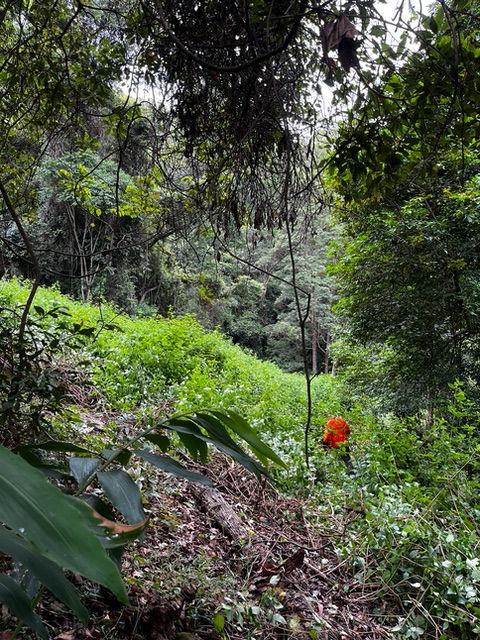
Originally introduced as an ornamental plant, now recognised as a Weed Of National Significance (WONS), Lantana camara forms large thickets in our natural areas. This site was disturbed by selective logging of Red Cedar (Toona ciliata). Likely introduced to the site by birds, Lantana was able to outcompete the native plants as they grew back. The Lantana thicket that is there today occupies several hectares.
Once the competition is removed (the Lantana), the rainforest is able to grow back naturally. Rainforest regrowth may include hundreds of species, complex structures, and a variety of food sources. A diverse, healthy ecosystem functions as intended. Filtering water before it enters our catchments, feeding our wildlife, cooling our towns.
Variety is the spice of life!

What do weeds have to do with climate change?
The functions listed above are referred to as ecosystem services - the services that our natural areas provide us humans. Here are some examples:
Mangroves act as a buffer between coastal settlements and rough seas.
Forests filter water before it enters our dams, meaning we have to do less to have good quality drinking water.
Forests take up and store carbon as they grow, reducing the amount of this greenhouse gas in our atmosphere.
But hold on, a forest of camphor laurels still sequesters carbon, doesn't it? Yes, it does. But what would happen if a disease that was deadly to only camphor laurels came about? A biodiverse ecosystem is more resilient to disease, predation, and the changing climate. Plus, the Tweed Shire is one of the most biodiverse local government areas in Australia - biodiversity is worth conserving in its own right, and not just because it provides benefits to humans.
What can you do about weeds?
Don't buy them - shop locally. There are plenty of amazing local nurseries that will sell you locally native plants that will thrive in your garden and support local fauna.
Don't dump garden waste - this is a major avenue for weeds to get into our bushland and waterways. Take it to the tip or use your organics bin.
Act local - join a Landcare group. There are plenty of people who, like you, hate weeds! Landcare groups are a great way to learn about your local environment. Bring the whole family.
Learn! - Education is a powerful tool. The resources below make a great starting point.
Websites
Peer-reviewed papers
The value of regrowth forests and woodlands for threatened fauna species – Thomas et al. 2025
Half of the habitat of Australia's highly imperilled narrow-range species is outside protected areas – Ward et al. 2025
Explaining differential vulnerability to climate change: A social science review – Thomas et al. 2019
Tools and Data
iNaturalist - a citizen science platform for identifying plants, animals, and fungi
Atlas of Living Australia - CSIRO data platform on living things
KeyBase - Dichotomous keys for identifying plants


Comments